Anguista Kupeka
Clinical Officer & Health Data Analyst
Turning clinical expertise and health data into insights that drive stronger HIV, TB and RMNCH programs
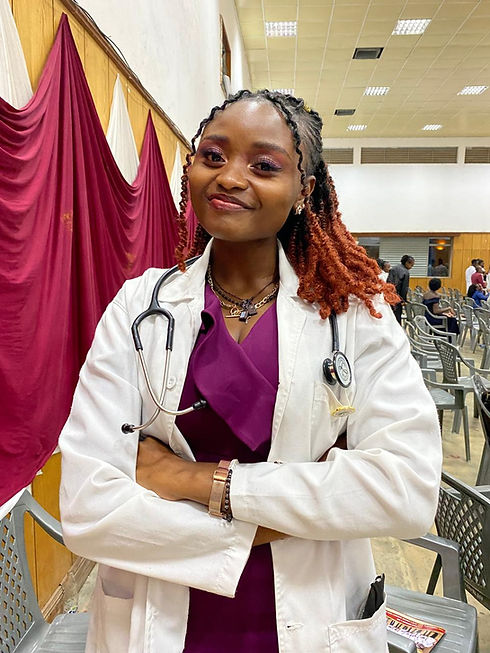

About Me
Hello, I'm a Registered Clinical Officer and Health Data Analyst, with over four years of experience strengthening global health programs through the strategic integration of clinical expertise and data-driven insights. My mission is to transform complex health data into actionable intelligence that improves program performance, patient outcomes and evidence-based decision-making across HIV, TB and RMNCH initiatives.
I've delivered measurable impact in both facility-based and remote environments. As a Virtual Program & Data Support Specialist, I structured digital documentation systems that increased on-time delivery rates by over 40% whilst reducing response delays by approximately 35% across multi-timezone teams. I've coordinated logistics and virtual events for 10+ stakeholders internationally and executed comprehensive data cleaning, validation and analysis using Python, SQL and Tableau to identify performance patterns that directly informed program adjustments and service delivery decisions.
My technical toolkit spans Python, SQL, Tableau, Pandas, DHIS2, EMR systems and Excel, enabling end-to-end support from data preprocessing through to visualisation and reporting. Fluent in English, native in Swahili and conversationally proficient in French, I bring strong multicultural communication capability to remote, distributed teams. I thrive in virtual environments, having proven my ability to deliver high-quality analytical outputs and maintain rigorous documentation standards entirely remotely.
Beyond paid work, I've served as Vice President of the Amazon Leadership Initiative (Central, Eastern, Northern Africa & Diaspora Caucus) and volunteered extensively across HIV programs, maternal health initiatives and community outreach with organisations including Langata Health Centre, Kianda Foundation and Missionaries of Charity. I hold a BSc in Clinical Medicine and am pursuing an MSc in Global Health & Infectious Diseases at the University of Edinburgh, certified in Good Clinical Practice, Advanced Cardiac Life Support and Data Science.
COMPETENCIES
Health Data Science & Analytics
I specialise in transforming raw health data into strategic intelligence that drives program improvement and evidence-based decision-making. I execute end-to-end data workflows including cleaning, validation and exploratory analysis using Python, SQL, Tableau and Pandas to identify trends, gaps and performance patterns across global health projects. I've successfully translated complex datasets into structured dashboards and written insights that supported operational adjustments and service delivery decisions for distributed research teams and program stakeholders across multiple countries.
Digital Health & Systems Strengthening
I have deep expertise in implementing and optimising digital health systems that improve documentation accuracy and program accountability. Throughout my clinical and program support roles, I've worked extensively with DHIS2, EMR systems and MoH reporting tools to strengthen data flows across HIV, TB and RMNCH programs. As a Virtual Program & Data Support Specialist, I structured digital documentation systems that increased on-time delivery rates by over 40%, demonstrating my ability to design workflows that enhance system performance in remote operational environments.
Global Health Program Monitoring (M&E)
My M&E capability combines clinical domain knowledge with technical data skills to ensure rigorous program monitoring and performance tracking. I've contributed to evidence generation by organising datasets, supporting research documentation and interpreting findings for health initiatives whilst maintaining organised digital records for traceability. I apply public health and clinical expertise to contextualise program data, refine analysis workflows and produce structured summaries that strengthen accountability to donors, government partners and technical stakeholders across distributed teams.
Remote Operations & Virtual Collaboration
I excel at delivering high-quality work entirely remotely across multiple time zones with proven systems for maintaining productivity and stakeholder engagement. I've coordinated travel logistics, itineraries and virtual events for 10+ stakeholders whilst organising scheduling systems that reduced response delays and meeting conflicts by approximately 35% in multi-timezone environments. I successfully collaborate with researchers, program teams and technical stakeholders across distributed global health settings, maintaining rigorous standards and clear communication without face-to-face supervision.
Clinical Practice & Infectious Disease Management
My foundation as a Registered Clinical Officer provides critical context that elevates my data and program work beyond purely technical execution. With over four years of hands-on clinical experience across HIV care, TB management, RMNCH services and emergency care in facility-based, community and humanitarian health settings, I understand the realities behind the data. I've delivered direct patient care, conducted clinical assessments and managed chronic disease cases whilst documenting outcomes in EMR systems, giving me unique insight into how clinical operations translate into program metrics and where data quality issues originate.
Case Study: Streamlining Global Health Workflows to Cut Delays by 35% and Boost Delivery by 40%
Executive Summary:
In early 2024, I led a comprehensive digital transformation for a global health client struggling with fragmented communication and low task visibility across multiple time zones. By implementing a centralised digital ecosystem with structured project management tools and re-engineered scheduling protocols, I reduced response delays and meeting conflicts by 35% whilst increasing on-time delivery rates by over 40%, maintaining 100% compliance with confidentiality standards across 10+ international stakeholders.
Context and Challenge:
Context: As a Virtual Program & Data Support Specialist for a healthcare client managing critical HIV, TB and RMNCH initiatives across multiple countries, I served as the operational bridge between diverse teams spanning continents. My role required ensuring that complex global health tasks remained on track despite geographical and temporal barriers whilst coordinating between clinical priorities, program deliverables and administrative workflows.
Challenge: The client faced significant operational bottlenecks threatening program delivery timelines. Communication was fragmented across multiple email threads, inbox delays created cascading scheduling conflicts and there was no centralised system for tracking project milestones or task ownership. Critical deliverables were at risk of slipping through the cracks, meeting conflicts were routine and team members across different time zones operated without shared understanding of priorities or progress.
Strategic Approach:
-
Phase 1: Assessment and Digital Infrastructure Design: I conducted a comprehensive workflow audit to identify pain points across communication channels and documentation practices. I then proposed a transition from manual, email-based tracking to a structured digital ecosystem tailored to global health programming needs, designing documentation hierarchies and project tracking templates that aligned with clinical and program priorities.
-
Phase 2: Stakeholder Alignment and Protocol Implementation: Acting as the bridge between clinical stakeholders and technical systems, I coordinated with 10+ international team members to build consensus around new operational protocols. I designed training sessions on the digital tools and implemented scheduling protocols specifically engineered to manage cross-continental time differences.
-
Phase 3: System Optimisation and Continuous Improvement: I maintained real-time project tracking, refined filing protocols based on feedback and established metrics to monitor system performance. I created structured inbox management systems and digital documentation standards that ensured seamless handoffs and maintained rigorous confidentiality compliance throughout all virtual collaborations.
Results and Impact:
Quantifiable Outcomes:
-
Reduced response delays and meeting conflicts by 35% through re-engineered scheduling protocols across multiple time zones.
-
Increased task visibility and on-time delivery rates by over 40% via centralised project tracking systems.
-
Coordinated logistics and virtual events for 10+ international stakeholders with zero scheduling conflicts post-implementation.
-
Maintained 100% compliance with confidentiality standards across all digital documentation.
Qualitative Achievements:
-
Transformed fragmented email-based workflows into a unified digital ecosystem providing real-time visibility into program progress.
-
Strengthened cross-continental collaboration through structured communication channels respecting time zone differences.
-
Enhanced program accountability via transparent task ownership and milestone tracking visible to all stakeholders.
-
Built scalable digital infrastructure accommodating future program expansion without requiring system overhaul.
Key Takeaway & Strategic Insight:
This transformation reinforced that effective digital infrastructure isn't about adopting sophisticated tools but designing systems aligned with how distributed teams actually work. By prioritising user adoption over technical complexity, I created sustainable operational improvements that outlasted my direct involvement.
Conclusion:
This case study demonstrates my ability to diagnose complex operational challenges, design tailored digital solutions and deliver measurable efficiency gains in remote, multi-stakeholder environments. The 35% reduction in delays and 40% improvement in delivery rates showcase my strategic capacity to transform organisational workflows in ways that strengthen accountability and position global health programs for sustained success.
Technical Proficiencies Utilised:
-
Asana: Deployed as central project management platform for task hierarchies, ownership assignment and real-time milestone visibility across distributed teams.
-
Google Workspace: Utilised for centralised documentation, collaborative file management and calendar coordination reducing communication fragmentation.
-
Trello: Implemented for visual workflow tracking enabling stakeholders to quickly assess project status.
-
Zoom: Leveraged for virtual stakeholder coordination, training sessions and cross-timezone meetings with collaborative problem-solving.
-
Slack: Established as primary communication channel for rapid stakeholder engagement, reducing email overload through topic-specific project channels.
Core Competencies Displayed:
-
Remote Operations & Virtual Collaboration
-
Digital Health Systems Strengthening
-
Global Health Program Monitoring (M&E)
-
Project Management & Workflow Optimisation
-
Stakeholder Coordination & Change Management
-
Data Security & Confidentiality Compliance
Case Study: Building Automated Data Systems That Eliminate Manual Work and Enable Real-Time Insights
Executive Summary:
In 2025, I inherited a critical global health dataset plagued by inconsistencies, missing entries and poor formatting that was blocking accurate performance assessment and delaying stakeholder reporting. By developing automated data cleaning scripts using Python and SQL and migrating outputs into Tableau dashboards, I drastically reduced manual verification time for the research team whilst providing stakeholders with real-time visibility into program performance, enabling rapid evidence-based operational adjustments with 100% traceability aligned to clinical and policy priorities.
Context and Challenge:
Context: As a Freelance Data Analyst supporting a global health research initiative in 2025, I strengthened the analytical foundation of a multi-country health program tracking HIV, TB and RMNCH service delivery outcomes. The program team comprised distributed researchers, clinical advisors and policy stakeholders who depended on timely, accurate data to assess performance patterns and make evidence-based programmatic decisions across multiple implementation sites.
Challenge: The dataset I inherited was fundamentally compromised. Years of inconsistent data entry protocols had created missing entries, duplicate records, inconsistent formatting and incompatible variable naming conventions. These quality issues were creating a cascading crisis: critical reporting timelines were slipping, the program team was spending excessive hours on manual verification rather than analysis and stakeholders lacked confidence in performance metrics. Without a scalable solution, program monitoring integrity was at risk and the team's ability to demonstrate impact to donors and government partners was severely compromised.
Strategic Approach:
-
Phase 1: Root Cause Analysis and Data Architecture Assessment: I conducted a comprehensive audit to map the full scope of quality issues and identify their origins. This involved interviewing remote data collectors to understand field-level constraints, reviewing historical data entry protocols and analysing patterns in missing or inconsistent records. I then designed a standardised cleaning and validation workflow tailored to health program data structure.
-
Phase 2: Automated Pipeline Development and Validation: Using Python (Pandas) and SQL, I developed automated scripts that systematically addressed each category of data quality issue: standardising date formats, reconciling duplicates, validating categorical variables against controlled vocabularies and flagging anomalies for manual review. I built validation checkpoints throughout the pipeline whilst creating detailed documentation of all transformation logic for transparency and reproducibility.
-
Phase 3: Visualisation Integration and Stakeholder Enablement: I migrated cleaned datasets into Tableau dashboards designed for non-technical stakeholders, translating complex analytical outputs into structured high-level summaries highlighting critical trends, service delivery gaps and performance patterns. I provided remote training on interpreting dashboards and established protocols for ongoing data quality maintenance ensuring long-term sustainability.
Results and Impact:
Quantifiable Outcomes:
-
Drastically reduced manual verification time for the research team, eliminating the previous bottleneck in the reporting workflow.
-
Provided stakeholders with real-time visibility into program performance through automated Tableau dashboards.
-
Ensured 100% traceability of analytical findings through comprehensive documentation of all data transformation logic.
-
Enabled rapid evidence-based operational adjustments by delivering structured insights within days rather than weeks.
Qualitative Achievements:
-
Transformed data readiness from a persistent barrier into a strategic asset for program decision-making.
-
Restored stakeholder confidence in performance metrics through transparent validation workflows.
-
Created scalable infrastructure accommodating future program expansion without requiring complete system redesign.
-
Strengthened programme credibility with donors and government partners through rigorous data management practices.
-
Enabled the research team to shift focus from data cleaning to higher-value analytical and strategic work.
Key Takeaway & Strategic Insight:
This project reinforced that effective data science in global health requires not just technical skill but deep understanding of operational realities and stakeholder needs. By prioritising automation, transparency and user-centred design, I created sustainable infrastructure empowering non-technical teams to make evidence-based decisions independently.
Conclusion:
This case study demonstrates my ability to diagnose complex data quality challenges, architect scalable analytical solutions and translate technical outputs into strategic intelligence that drives program performance. By combining clinical domain knowledge with advanced data science capabilities, I delivered infrastructure that solved immediate reporting bottlenecks whilst positioning the programme for sustained evidence-based decision-making.
Technical Proficiencies Utilised:
-
Python (Pandas): Developed automated data cleaning scripts to standardise formats, reconcile duplicates and validate categorical variables across complex multi-site health datasets.
-
SQL: Designed and executed queries to merge disparate data sources, perform quality checks and structure datasets for optimal analytical workflows.
-
Tableau: Built interactive dashboards translating cleaned datasets into visual insights on service delivery trends and program metrics for non-technical stakeholders.
-
Excel: Utilised for initial data profiling, manual validation of edge cases and creating stakeholder-facing summary reports.
-
Microsoft Office Suite: Leveraged for comprehensive documentation of transformation logic, validation protocols and user guides ensuring knowledge transfer to remote teams.
Core Competencies Displayed:
-
Health Data Science & Analytics
-
Digital Health & Systems Strengthening
-
Global Health Program Monitoring (M&E)
-
Remote Operations & Virtual Collaboration
-
Data Quality Management & Validation
-
Stakeholder Communication & Training
View Gallery


Case Study: Redesigning HIV/TB Care Tracking to Achieve 100% Documentation and Keep Every Patient Connected
Executive Summary:
As a Clinical Officer, I identified critical gaps in continuity of care for HIV/TB co-infected patients caused by fragmented documentation and referral systems delaying treatment initiation and creating high patient loss to follow-up. By implementing a revamped clinical assessment and tracking protocol integrating EMR optimisation, IPC guidelines and cross-team collaboration spanning facility and community-based programs, I achieved 100% digital documentation of high-risk cases whilst significantly reducing turnaround time between diagnosis and treatment initiation, providing facility management with actionable evidence for superior decision-making.
Context and Challenge:
Context: As a Clinical Officer at Kianda Foundation in Nairobi, I provided comprehensive clinical services across infectious disease management, RMNCH and emergency care within a facility serving a high-burden urban population. My role positioned me at the intersection of direct patient care and health systems strengthening, requiring seamless coordination between clinical staff, laboratory teams, nursing personnel and community health volunteers to maintain continuity of care for vulnerable populations.
Challenge: I identified a critical vulnerability in our HIV/TB co-infection management pathway. Documentation and referral systems were fragmented across paper-based records, inconsistent EMR entries and informal handoff protocols. This created dangerous gaps: patients diagnosed with co-infections experienced delayed treatment initiation and a concerning proportion were being lost to follow-up as they moved between facility-based care and community monitoring. Without a structured tracking system extending beyond facility walls, we risked poor treatment outcomes, disease transmission and failure to meet national program reporting requirements.
Strategic Approach:
-
Phase 1: Gap Analysis and Stakeholder Alignment: I conducted a systematic review of patient flow from initial presentation through diagnosis, treatment initiation and follow-up to identify where documentation broke down or handoffs failed. I engaged nursing teams, laboratory staff and community health volunteers in collaborative problem-solving to build consensus around a new integrated tracking protocol working within existing resource limitations.
-
Phase 2: Protocol Development and EMR Optimisation: I designed a standardised clinical assessment and tracking protocol prioritising infectious disease management and RMNCH services whilst ensuring every high-risk case received structured digital documentation. I worked directly with the EMR system to create custom fields, automated alerts and reporting templates capturing critical data points for HIV/TB co-infection monitoring whilst establishing clear IPC guidelines integrated into the workflow.
-
Phase 3: Cross-Team Implementation and Community Extension: I led training sessions for clinical and nursing staff on the new protocol whilst collaborating with community health volunteers to extend tracking beyond facility boundaries. I established communication channels between facility and community teams, created patient handoff checklists and implemented case review meetings where complex operational data was translated into actionable insights.
Results and Impact:
Quantifiable Outcomes:
-
Achieved 100% digital documentation of high-risk HIV/TB co-infection cases, eliminating previous gaps in EMR completeness.
-
Significantly reduced turnaround time between diagnosis and treatment initiation through streamlined referral and laboratory coordination.
-
Enhanced continuity of care for HIV and TB patients by creating seamless tracking between facility-based and community-based programs.
-
Drastically improved program accountability and reporting accuracy through structured data capture aligned with national M&E requirements.
Qualitative Achievements:
-
Transformed fragmented documentation into a unified tracking system preventing patients from being lost to follow-up.
-
Strengthened cross-functional collaboration between clinical, nursing, laboratory and community health teams through shared protocols.
-
Provided facility management with actionable evidence for resource allocation based on real-time operational data.
-
Enhanced overall health system efficiency through reproducible workflows scalable to other service delivery areas.
-
Improved patient safety and treatment outcomes through systematic monitoring of high-risk cases from diagnosis through completion.
Key Takeaway & Strategic Insight:
This initiative reinforced that effective health systems strengthening requires bridging clinical excellence with operational discipline. By embedding rigorous documentation into the natural flow of patient care rather than treating it as an administrative burden, I created sustainable improvements serving clinical quality, program accountability and patient outcomes simultaneously.
Conclusion:
This case study demonstrates my ability to integrate clinical expertise with health systems thinking to solve complex service delivery challenges. By achieving 100% digital documentation whilst reducing treatment delays, I showcased the strategic value of combining hands-on clinical practice with data-driven program monitoring to strengthen health system efficiency in resource-constrained settings.
Technical Proficiencies Utilised:
-
EMR Systems: Optimised electronic medical record workflows to create custom fields, automated alerts and reporting templates ensuring complete digital documentation of high-risk HIV/TB co-infection cases.
-
DHIS2: Leveraged district health information system for structured data capture aligned with national M&E requirements and program accountability standards.
-
MoH Reporting Tools: Utilised Ministry of Health reporting frameworks ensuring all tracking protocols met government infectious disease surveillance standards.
-
Microsoft Excel: Deployed for case tracking dashboards, patient flow analysis and creation of handoff checklists used by facility and community teams.
-
Microsoft Office Suite: Utilised for protocol documentation, training materials and case review meeting reports translating operational data into management insights
Core Competencies Displayed:
-
Clinical Practice & Infectious Disease Management
-
Digital Health & Systems Strengthening
-
Global Health Program Monitoring (M&E)
-
Health Data Analysis
-
IPC Implementation
-
Cross-Functional Team Leadership
Case Study: Uniting 10+ Regional Partners to Strengthen Leadership and Drive Participation Across Africa
Executive Summary:
As Vice President of the Amazon Leadership Initiative (Central, Eastern, Northern Africa & Diaspora Caucus), I identified critical fragmentation in engagement and resource sharing across three major African regions limiting the impact of our health mentorship and advocacy programs. By spearheading a regional integration strategy leveraging virtual forums, digital tracking systems and structured reporting frameworks, I expanded regional engagement across 10+ international stakeholders whilst establishing robust monitoring of mentorship outcomes, resulting in strengthened advocacy networks and a significant increase in participation rates for regional leadership initiatives.
Context and Challenge:
Context: From June 2022 to May 2023, I served as Vice President of the Amazon Leadership Initiative's Central, Eastern, Northern Africa & Diaspora Caucus, a pan-African leadership development organisation focused on empowering women and youth through health advocacy, mentorship and community outreach. My role positioned me as the primary liaison for stakeholders spanning multiple countries across three major African regions, responsible for coordinating virtual leadership modules and ensuring programmatic alignment with our mission through entirely remote collaboration.
Challenge: Despite our ambitious mandate to address shared health challenges across Central, Eastern and Northern Africa, our caucus suffered from fragmented engagement and inconsistent resource sharing among members. There was no unified platform for collaboration, mentorship initiatives operated in silos without cross-regional learning and we lacked systematic tracking of outreach outcomes or participation metrics. This fragmentation meant valuable expertise remained underutilised, community health programs couldn't achieve meaningful scale and we had limited visibility into whether our leadership development efforts were translating into sustained regional advocacy.
Strategic Approach:
-
Phase 1: Assessment and Integration Framework Design: I conducted comprehensive stakeholder mapping to understand diverse expertise, geographical contexts and engagement barriers across our caucus membership. I designed a regional integration strategy balancing unified coordination with respect for local autonomy, creating clear communication protocols and establishing shared objectives aligning individual initiatives with our collective health advocacy mission.
-
Phase 2: Digital Infrastructure Implementation and Virtual Forum Establishment: I implemented digital tracking systems and collaborative project management tools to create transparent visibility into ongoing initiatives across all regions. I organised structured virtual forums bringing together stakeholders from different geographical backgrounds, facilitating knowledge exchange on health mentorship approaches and creating opportunities for joint advocacy. I established a robust reporting framework capturing participation metrics, mentorship outcomes and program delivery milestones.
-
Phase 3: Stakeholder Coordination and Program Scaling: Serving as the primary liaison for 10+ international stakeholders, I coordinated the delivery of virtual leadership modules whilst ensuring all outreach initiatives remained strictly aligned with our mission of empowering women and youth. I created feedback loops allowing successful community health programs to be adapted and scaled across regions, fostering cross-pollination of best practices.
Results and Impact:
Quantifiable Outcomes:
-
Expanded regional engagement across 10+ international stakeholders spanning Central, Eastern and Northern Africa plus diaspora communities.
-
Achieved a significant increase in participation rates for regional leadership initiatives through improved program visibility.
-
Established robust monitoring systems enabling precise tracking of mentorship outcomes and advocacy impact across distributed programs.
-
Coordinated successful delivery of virtual leadership modules with 100% alignment to organisational mission and values
Qualitative Achievements:
-
Transformed fragmented individual initiatives into a cohesive regional advocacy network with shared learning and resource exchange.
-
Strengthened community health programs through cross-regional collaboration and adaptation of successful intervention models.
-
Enhanced program visibility and credibility by demonstrating systematic approach to mentorship and health advocacy outcomes.
-
Built sustainable digital infrastructure for remote collaboration that outlasted individual leadership tenure.
-
Created inclusive platforms where diverse geographical and cultural perspectives enriched health systems strengthening approaches.
Key Takeaway & Strategic Insight:
This experience reinforced that effective pan-regional leadership requires balancing structured coordination with respect for local context and autonomy. By creating infrastructure that enabled rather than constrained member initiatives, I built genuine collaboration that leveraged diversity as a strategic asset.
Conclusion:
This case study demonstrates my capability to lead complex stakeholder coordination across international boundaries whilst delivering measurable program growth and impact. By expanding engagement across 10+ international stakeholders and driving significant participation increases, I showcased strategic leadership skills essential for remote global health roles requiring cross-cultural collaboration and mission-aligned execution.
Technical Proficiencies Utilised:
-
Zoom: Coordinated virtual leadership modules, stakeholder forums and cross-regional meetings enabling real-time collaboration across multiple time zones.
-
Asana: Implemented as collaborative project tracking platform to create transparency across regional initiatives and monitor mentorship program delivery milestones.
-
Google Workspace: Utilised for centralised documentation, resource sharing and reporting framework maintenance across distributed leadership team.
-
Slack: Established as primary communication channel for rapid stakeholder engagement and topic-specific discussions organised by health advocacy focus areas.
-
Microsoft Office Suite: Leveraged for comprehensive reporting on participation metrics, mentorship outcomes and program impact analysis.
Core Competencies Displayed:
-
Remote Operations & Virtual Collaboration
-
Global Health Program Monitoring (M&E)
-
Stakeholder Coordination & Change Management
-
Community Health Programming
-
Digital Health & Systems Strengthening
-
Executive Leadership & Strategic Planning
View Gallery

Case Study: Creating Digital Knowledge Systems That Accelerate Research and Improve Evidence Quality
Executive Summary:
As a Global Health Research Support specialist, I inherited a critical backlog of unorganised clinical and operational datasets from international initiatives that was slowing evidence synthesis and delaying research reports needed for policy adjustments. By structuring a comprehensive digital record-keeping system and applying my dual background in clinical medicine and data science to contextualize complex datasets, I enhanced research efficiency through organised digital records enabling seamless data retrieval whilst strengthening program accountability by ensuring 100% alignment of analytical outputs with stakeholder reporting requirements, significantly improving the quality and practical relevance of research insights.
Context and Challenge:
Context: As a Freelance Data Analyst & Global Health Research Support specialist working remotely in 2025, I supported distributed research teams managing multi-country health initiatives spanning HIV, TB, RMNCH and health systems strengthening projects. My position required serving as the technical bridge between raw operational data and final research outputs, leveraging my clinical officer background to ensure data analysis workflows remained grounded in public health realities whilst meeting rigorous academic and policy standards.
Challenge: Our team faced a critical operational bottleneck: a substantial backlog of unorganised clinical and operational datasets from various international initiatives with no structured system for managing these data points. Research documentation was scattered across individual folders, dataset versioning was inconsistent and there was no standardised approach to organizing findings or tracking data lineage. This disorganisation was delaying evidence synthesis, researchers spent excessive time searching for datasets rather than conducting analysis and we risked producing reports with incomplete or incorrectly attributed data, compromising research quality and stakeholder reporting compliance.
Strategic Approach:
-
Phase 1: Audit and Knowledge Architecture Design: I conducted a comprehensive assessment of existing datasets, documentation practices and researcher workflows to understand the scope of the organisational challenge. I designed a structured digital record-keeping system tailored to global health research requirements, creating hierarchical folder structures, standardised naming conventions and metadata protocols enabling efficient data retrieval whilst maintaining rigorous traceability standards.
-
Phase 2: Clinical Contextualization and Workflow Refinement: I applied my clinical medicine background to contextualize datasets, ensuring technical analysis workflows remained aligned with public health priorities and clinical realities. I collaborated closely with researchers to understand evidence synthesis requirements and created streamlined interpretation protocols bridging raw data with final research outputs whilst establishing clear documentation standards for dataset provenance and analytical decisions.
-
Phase 3: Implementation and Stakeholder Alignment: I led the migration of existing datasets into the new digital knowledge management system whilst providing training to remote research team members on standardised workflows. I created templates and guides for organising new research documentation and established quality assurance checkpoints ensuring all analytical outputs aligned with stakeholder reporting requirements and policy priorities.
Results and Impact:
Quantifiable Outcomes:
-
Enhanced research efficiency by establishing organised digital records enabling seamless retrieval of data for evidence synthesis, eliminating previous search time bottlenecks.
-
Strengthened program accountability by ensuring 100% alignment of analytical outputs with stakeholder reporting requirements and policy priorities.
-
Significantly improved the quality of research insights through systematic application of clinical domain knowledge to contextualize analysis workflows.
-
Ensured complete traceability of all findings through comprehensive digital record-keeping and metadata documentation standards.
Qualitative Achievements:
-
Transformed fragmented dataset management into a unified knowledge system supporting efficient evidence synthesis across multiple international initiatives.
-
Bridged the gap between technical data analysis and practical public health application through clinical contextualization.
-
Enabled researchers to shift focus from administrative data searching to higher-value analytical work.
-
Built sustainable infrastructure for knowledge management accommodating future research projects without requiring system redesign.
-
Enhanced credibility of research outputs with stakeholders by demonstrating rigorous documentation and traceability standards.
Key Takeaway & Strategic Insight:
This project reinforced that effective research support requires more than technical data skills; it demands the ability to translate between clinical realities, analytical rigor and policy relevance. By designing knowledge management systems serving all three domains simultaneously, I created infrastructure that elevated research quality whilst improving operational efficiency.
Conclusion:
This case study demonstrates my capability to bridge clinical expertise, data science and knowledge management to solve complex research operations challenges. By enhancing research efficiency and strengthening program accountability through structured digital systems, I showcased the strategic value of combining domain knowledge with technical proficiency to deliver research insights that are both academically robust and practically relevant.
Technical Proficiencies Utilised:
-
Python (Pandas): Utilised for dataset organization, standardisation and validation ensuring consistent formatting across diverse clinical and operational data sources.
-
Microsoft Excel: Deployed for metadata tracking, dataset cataloguing and creation of researcher-facing templates guiding standardised documentation practices.
-
Google Workspace: Leveraged for centralised digital record storage, collaborative documentation and version control enabling distributed research team access.
-
Microsoft Office Suite: Utilised for comprehensive documentation of analytical workflows and stakeholder reporting alignment protocols.
-
SQL: Applied for structured querying of large datasets and creation of efficient data retrieval systems supporting evidence synthesis.
Core Competencies Displayed:
-
Health Data Science & Analytics
-
Global Health Program Monitoring (M&E)
-
Research Reporting
-
Digital Health & Systems Strengthening
-
Remote Operations & Virtual Collaboration
-
Clinical Practice & Infectious Disease Management
View Gallery


